Selected Work - Automation

MintCollect - automating the minutes between a card and its value

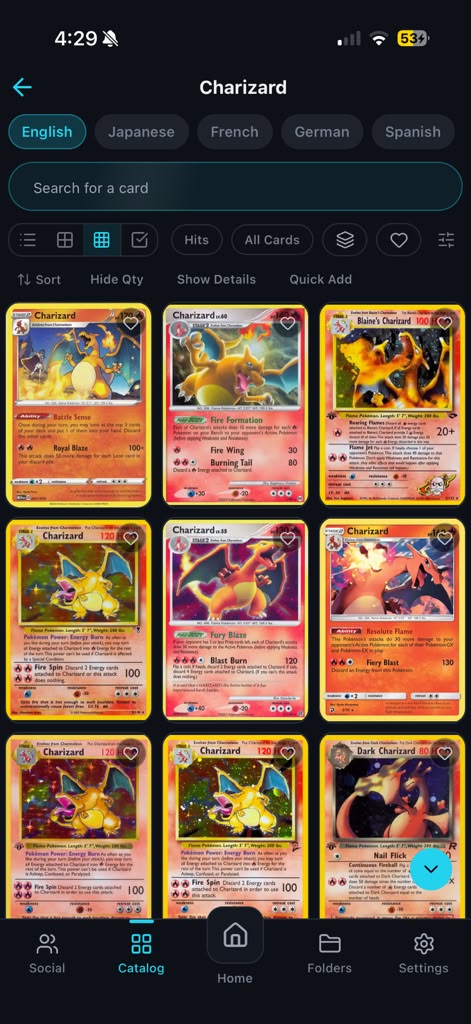
Identifying and pricing a trading card by hand takes minutes and a lot of squinting-and money math across a marketplace is unforgiving. I built the app side of the flow that does it in seconds: a phone-camera scan-to-match flow and daily-recomputed pricing, running automatically in an app with 85K+ accounts.

Role

Founding Engineer / Automation

Focus

Recognition · Pricing · Money math

Links

App Store · GitHub

01The problem, and the manual way it was handled

Collectors used to identify a card by eye, finding the set, number, and variant, then hunt across listings to guess its value. That is minutes per card across a whole collection, with plenty of room to get it wrong. Once people can buy and sell, every cent of pricing, fees, and payouts has to be right every time. The bet was that collectors will transact if recognition and money math become automatic instead of manual.

02What I automated

  • Scan-to-match recognition - a phone-camera capture feeds an identification pipeline that returns a card's identity from a 185k-card catalog-the manual lookup, gone.

  • Daily-recomputed pricing - a scheduled job revalues the catalog so a collection always reads as a live number, with no one updating prices by hand.

  • Entitlement automation - free and paid tiers gate features through automated entitlement checks wired to Stripe and RevenueCat-no manual account flipping.

The team's systems

  • Marketplace money math - the order → shipment → refund → dispute lifecycle computes fees, payouts, and settlement automatically - correct by construction, not by manual checking.

03Automation decisions

Identify and price in seconds

Problem
The habit that brings users back is checking what a card is and what it is worth, and doing that by hand took several minutes.
Approach
I automated the whole path from camera capture through recognition, catalog match, and current price so it returns in a couple of seconds.
Result
A loop fast enough to run every day, in an app with 85K+ accounts.

Settlement computed, not hand-checked

Problem
Fees, payouts, and refunds across a marketplace are repetitive and unforgiving, and one manual error erodes the trust the product runs on.
Approach
The team encoded the financial lifecycle as idempotent steps so settlement is computed automatically and the same event never gets applied twice.
Result
A transaction flow people were willing to pay into, with no hand-checking of money math.

Nightly catalog repricing

Problem
All 185k cards need fresh prices every day from several thin and noisy marketplaces, which is impossible by hand and fragile if done naively.
Approach
I built a resume-safe nightly batch that ingests about 1.45M price rows and computes a confidence-weighted median per card and grade, weighting sources by freshness and liquidity.
Result
Prices stay stable even for illiquid cards, recompute unattended, and are safe to re-run after a failure.

Entitlements driven by billing events

Problem
Granting and revoking paid access by hand does not scale and quietly leaks features to accounts that have lapsed.
Approach
I drove entitlement state from server-verified Stripe and RevenueCat webhooks, so access turns on and off from real billing events with no manual account changes.
Result
Paid access stays correct on its own, with no support ticket to toggle a feature and no stale grants.

04How it was built

Mobile-first on a stack chosen for velocity and pipelines that hold up under marketplace load.

React NativeFlask / PythonPostgreSQLAWSStripeRevenueCat

05Outcomes

Seconds

Scan-to-value, was minutes

185k+

Cards auto-cataloged

85K+

Accounts on automated pipelines